
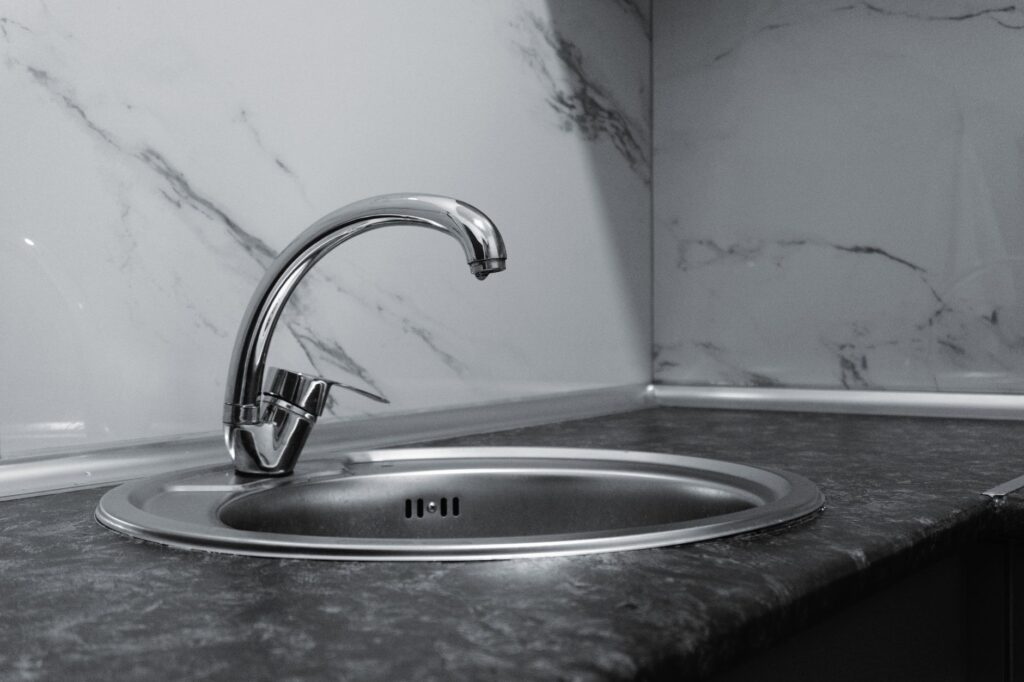
I lost count years ago of how many times a homeowner handed me a little plastic baggie with a worn washer inside, convinced that swapping it would end the drip once and for all. Sometimes it did. More often, the washer was a symptom, not the cause, and the real trouble was hiding somewhere they never thought to look.
The myth that a dripping faucet is always a cheap, five-minute washer replacement has probably cost more homeowners money than almost any other plumbing misunderstanding I run into. Here’s what actually goes on behind that steady little tick of water.
The Washer Replacement Myth That Costs Homeowners More
The washer theory made perfect sense in an era when nearly every faucet was a compression model with a rubber washer pressing against a metal seat. Replace the worn rubber, restore the seal, done. But most faucets sold in the last few decades don’t work that way at all. When people buy a bag of assorted washers and start disassembling a modern faucet, they often find there’s no washer to swap, or they replace one that was never the problem. In the process, they nick a seat, strip a thread, or lose a tiny spring, and a fifteen-dollar fix turns into a cartridge or a whole fixture.
What Actually Causes a Faucet to Drip
A drip is water escaping a seal it should be holding. That seal can fail for a dozen reasons: a worn O-ring, a cracked cartridge, a pitted valve seat, debris lodged against a rubber face, or a spring that has lost its tension. The water doesn’t care which part gave out, it simply finds the path of least resistance. Diagnosing a drip is really about figuring out which seal failed and why, not grabbing the first replaceable-looking rubber part you see.
Cartridge, Ball, and Ceramic Disc Designs Behave Differently
This is where most weekend repairs go sideways. A cartridge faucet uses a self-contained unit you usually replace whole. A ball faucet relies on springs, seats, and a slotted ball that have to seat precisely. A ceramic disc faucet seals two polished discs against each other and almost never needs a washer at all. Treating all three the same way is like using one key for three different locks. Knowing which design you have changes everything about the repair, including whether a washer is even part of the equation.
Why Mineral Buildup Fools So Many Weekend Repairs
Hard water leaves scale on valve seats and cartridges, and that buildup can mimic a worn part. People replace a perfectly good cartridge, reassemble everything, and the drip comes right back because the real culprit was mineral crust on the seat. Scale also makes parts grind and bind during removal, which leads to the next trap.
The Overtightening Trap and the Damage It Hides
When a faucet keeps dripping, the instinct is to crank the handle harder or torque down the packing nut. That extra force crushes O-rings, deforms seats, and compresses washers past the point of sealing. I’ve opened up faucets where the original part was fine and the only damage was from someone muscling it shut night after night. Overtightening doesn’t stop a drip, it manufactures new leaks.
When a Drip Signals a Problem Deeper in the System
Occasionally the faucet isn’t the villain at all. High water pressure, water hammer, or a failing pressure regulator can stress every seal in the house, and the faucet simply drips first because it’s the weakest link. If you fix one fixture and another starts leaking soon after, the pattern is telling you something about the system, not the part.
Knowing the Moment to Call Plumbing Trinity NC
There’s no shame in reaching a point where the smart move is a professional. If you’ve replaced the obvious parts and the drip persists, if the shutoff valve won’t seal, or if you suspect a pressure issue feeding the whole house, calling a licensed plumber like Plumbing Trinity NC before you do more harm is usually the cheaper path. A good diagnosis costs far less than a project that spirals into a fixture replacement and water damage under the sink.
What I Wish Every Homeowner Understood Before Grabbing a Wrench
Identify your faucet type before you touch a single screw. Shut off the water, lay out parts in order, and inspect the seat and O-rings as carefully as the washer. Most importantly, let go of the idea that a drip has one universal cause. The steady tick coming from your sink is a small puzzle with several possible answers, and solving it starts with respecting how many ways a seal can fail.